Deep Sky Objects: Observing Beyond the Solar System
Once you have explored the Moon and the bright planets, the real journey begins. Deep Sky Objects (DSOs) refer to everything outside our immediate solar neighborhood—clusters of stars, vast clouds of gas, and distant galaxies.
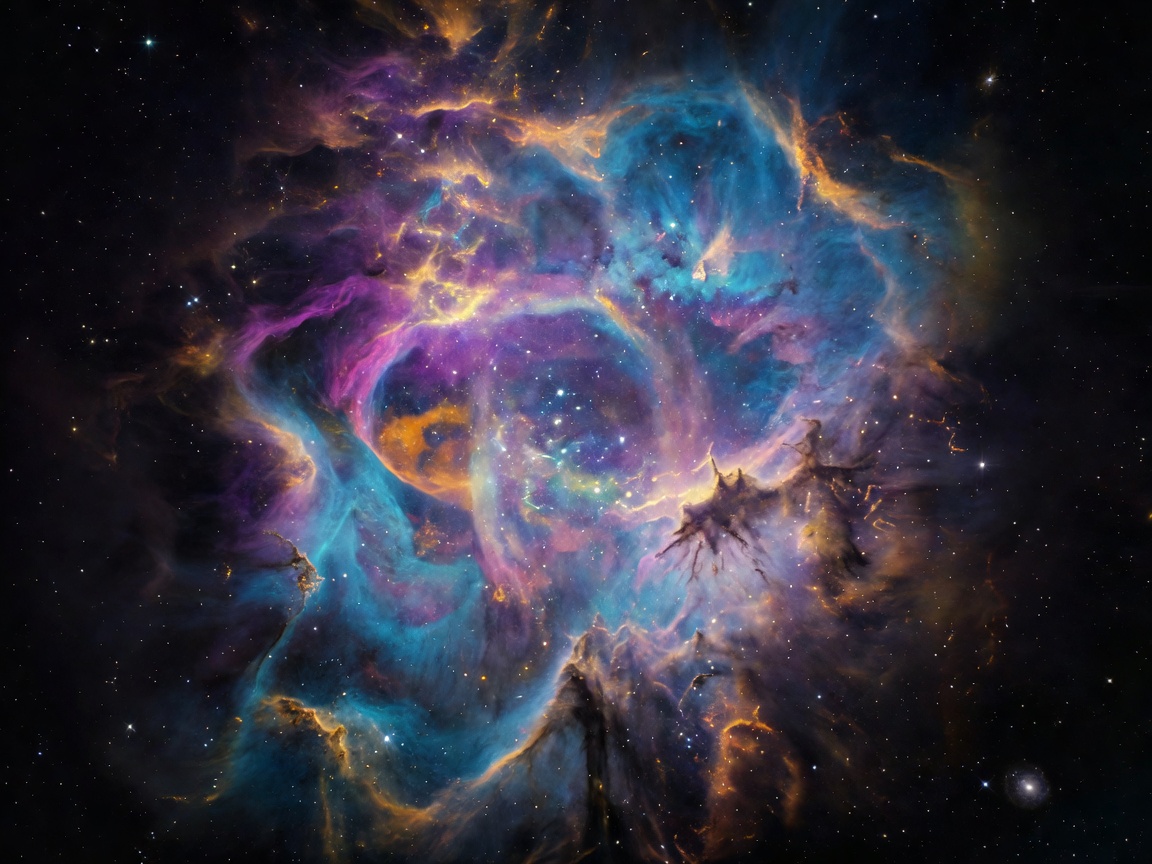
The Messier Catalog
The best starting point for tracking down DSOs is the Messier Catalog. Compiled by French astronomer Charles Messier in the late 18th century, it is a list of 110 astronomical objects. Messier was actually a comet hunter; he cataloged these fuzzy, stationary objects simply so he and other astronomers would not mistake them for new comets.
Ironically, this list of "comet-like nuisances" became the definitive checklist for amateur astronomers. The Messier objects are among the brightest and most beautiful deep-sky targets visible from the Northern Hemisphere, containing prime examples of every major DSO category.
Star Clusters: Open vs. Globular
Star clusters are groupings of stars held together by mutual gravitational attraction. They come in two distinct varieties.
Open Clusters: These are loose, irregular groupings of young stars that recently formed from the same molecular cloud. They typically contain dozens to a few hundred stars and are found within the spiral arms of our galaxy. The Pleiades (M45) is the most famous example, easily visible to the naked eye as a tight grouping of blue stars. Open clusters are best viewed at low magnifications, making them excellent targets for binoculars and small telescopes.
Globular Clusters: Unlike open clusters, globulars are ancient, densely packed spheres containing hundreds of thousands—sometimes millions—of older stars. They orbit the galactic core in a vast spherical halo. Through a telescope, a globular cluster like the Great Cluster in Hercules (M13) looks like a glittering pile of diamond dust on black velvet. Resolving individual stars near the dense core requires a moderate-to-large aperture telescope under steady skies.
Nebulae: The Stellar Nurseries and Graveyards
Nebulae are immense clouds of interstellar dust and gas. They generally fall into categories based on how they emit or interact with light.
- Emission Nebulae: These are active star-forming regions. High-energy radiation from newborn stars ionizes the surrounding hydrogen gas, causing it to glow. The Orion Nebula (M42) is the most famous example, visible as a fuzzy patch in Orion's sword.
- Reflection Nebulae: These clouds of dust do not emit their own light; instead, they reflect the light of nearby stars. They frequently appear alongside emission nebulae.
- Planetary Nebulae: Despite the name, these have nothing to do with planets. They are the remnants of dying sun-like stars that have expelled their outer gas layers into space. The Ring Nebula (M57) and the Dumbbell Nebula (M27) are striking examples that resemble ghostly smoke rings or hourglasses through a telescope.
Galaxies: Island Universes
Galaxies are massive gravitational bounds of stars, dust, and dark matter. Because they reside outside the Milky Way, they are incredibly distant and appear quite faint.
The Andromeda Galaxy (M31) is our closest large galactic neighbor, situated roughly 2.5 million light-years away. Even at that distance, it spans an area of the sky larger than the full moon. Observing galaxies visually requires a large aperture and exceptionally dark skies. Under suburban skies, most galaxies appear as indistinct grayish smudges. Only under pristine, rural skies with a large telescope can visual observers begin to trace the delicate structure of spiral arms or the dramatic dust lanes bisecting a galactic core.
The Art of Averted Vision
When observing very faint deep-sky objects, amateurs employ a biological trick called averted vision. The center of your eye's retina (the fovea) is packed with cone cells, which are excellent at resolving sharp detail and color but require bright light. The outer edges of the retina are lined with rod cells, which cannot see color but are highly sensitive to faint light.
By looking slightly to the side of a faint galaxy or nebula, you place the light onto the sensitive rod cells. An object that is completely invisible when looked at directly will suddenly pop into view in your peripheral vision. Mastering averted vision is a critical skill for any deep-sky observer.