Finding Dark Skies: Escaping the City Glow
The greatest limitation in modern astronomy is not the size of your telescope, but the darkness of your sky. Light pollution washes out faint starlight, turning magnificent galaxies into invisible smudges.
The Impact of Light Pollution
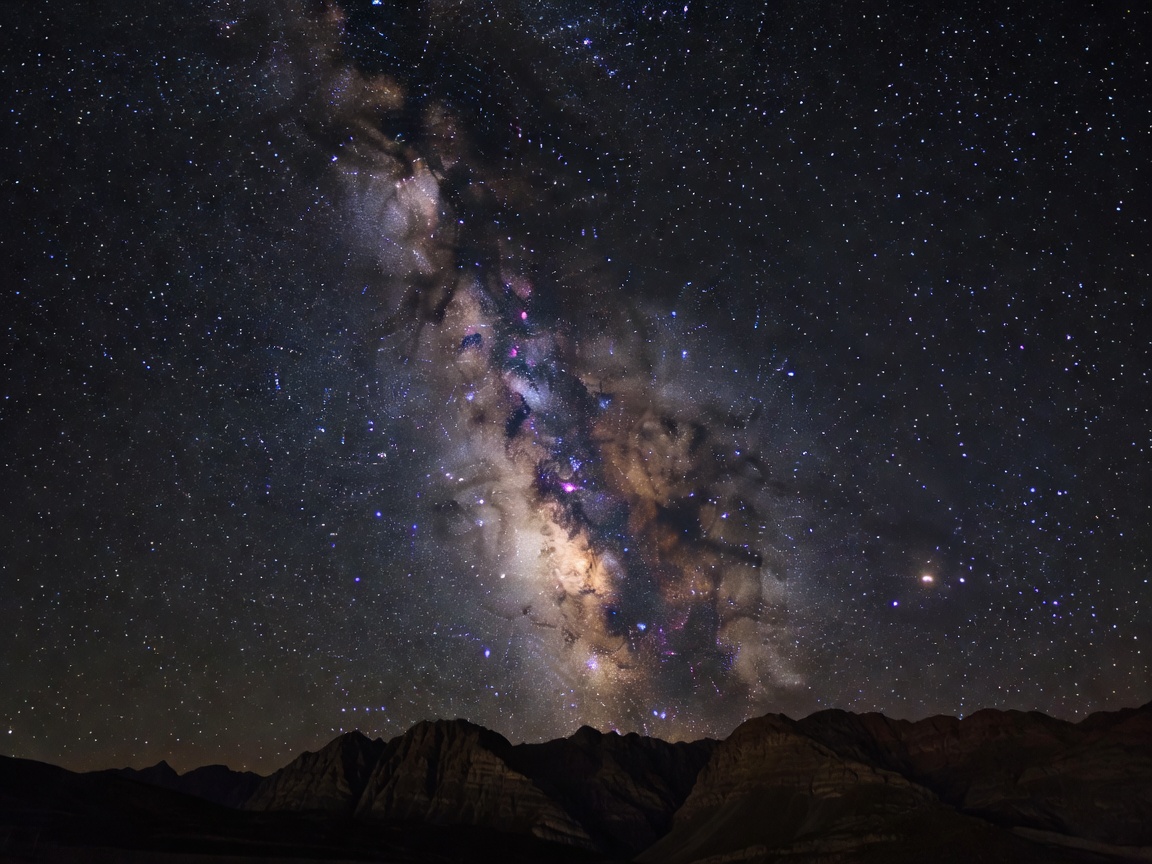
Urban expansion and the widespread use of unshielded LED street lighting have dramatically altered our view of the night sky. The artificial light scatters in the atmosphere, creating a persistent skyglow that overwhelms the faint photons traveling millions of light-years to reach your eye. For deep-sky observation—viewing nebulae, star clusters, and galaxies—a dark sky is far more critical than a large aperture.
To put this in perspective, an amateur astronomer using a simple pair of binoculars in a truly dark desert environment will often see more structure in the Milky Way and faint deep-sky objects than someone using a large, expensive telescope from the center of a major metropolitan area.
Understanding the Bortle Scale
To quantify the darkness of a given location, astronomers rely on the Bortle Dark-Sky Scale. Created by John E. Bortle, this nine-level numeric scale measures the night sky's brightness and the observability of astronomical objects.
- Class 8-9 (Inner City): The sky is brightly lit, often glowing orange or white. Only the brightest stars, planets, and the moon are visible. Deep-sky objects are completely washed out.
- Class 5-7 (Suburban): The Milky Way is entirely invisible or severely washed out. Brighter star clusters can be spotted with telescopes, but galaxies lack detail.
- Class 3-4 (Rural): The Milky Way becomes visible in complex detail. Light pollution domes are only visible on the distant horizon. Excellent for most amateur observation.
- Class 1-2 (Excellent Dark Sky): Truly dark, pristine skies. The Milky Way casts noticeable shadows, and the airglow of the atmosphere is visible. These locations are increasingly rare and often require travel to deserts, high mountains, or remote parks.
Tools for Finding Dark Locations
Finding a dark sky location requires a bit of planning. The most effective tool is a light pollution map, widely available online, which overlays satellite data of artificial night sky brightness onto geographic maps. By studying these maps, you can identify regions within driving distance that fall into lower Bortle classes.
When selecting a site, consider factors beyond just darkness. Elevation is a major advantage; driving to a higher altitude places you above lower atmospheric haze, dust, and localized ground fog. Distance from major highways is also crucial to avoid the intermittent glare of vehicle headlights.
Atmospheric Conditions: Seeing vs. Transparency
A dark sky is only part of the equation; the atmosphere itself must cooperate. Astronomers evaluate atmospheric conditions using two metrics: seeing and transparency.
Transparency refers to the clarity of the air. High humidity, dust, smoke, and thin cirrus clouds reduce transparency, scattering light and washing out faint objects. High transparency is vital for viewing galaxies and nebulae.
Seeing refers to the stability of the atmosphere. When the air is turbulent due to wind or thermal currents, stars twinkle vigorously, and planetary details blur as if looking through running water. Excellent "seeing" conditions are required to push your telescope to high magnifications to view crisp details on Jupiter, Saturn, or the lunar surface.
Protecting Your Night Vision
Once you reach a dark site, preserving your night vision is paramount. The human eye takes up to 30 to 45 minutes to fully dark-adapt as the retina builds up a chemical called rhodopsin. A single glance at a white flashlight, a smartphone screen, or a car headlight will instantly destroy this adaptation, forcing you to start the process over.
To navigate and consult star charts, amateur astronomers use dim red flashlights. Red light has a minimal impact on dark adaptation. If you must use a smartphone or tablet for digital planetarium apps, ensure the device's screen is set to its absolute lowest brightness and the app's dedicated "night mode" (which turns the interface entirely red and black) is enabled.