Identifying Constellations: Mapping the Night Sky
Before you can master a telescope, you must learn to navigate by eye. The constellations act as the geography of the cosmos, providing landmarks that help you locate faint and elusive deep-sky objects.
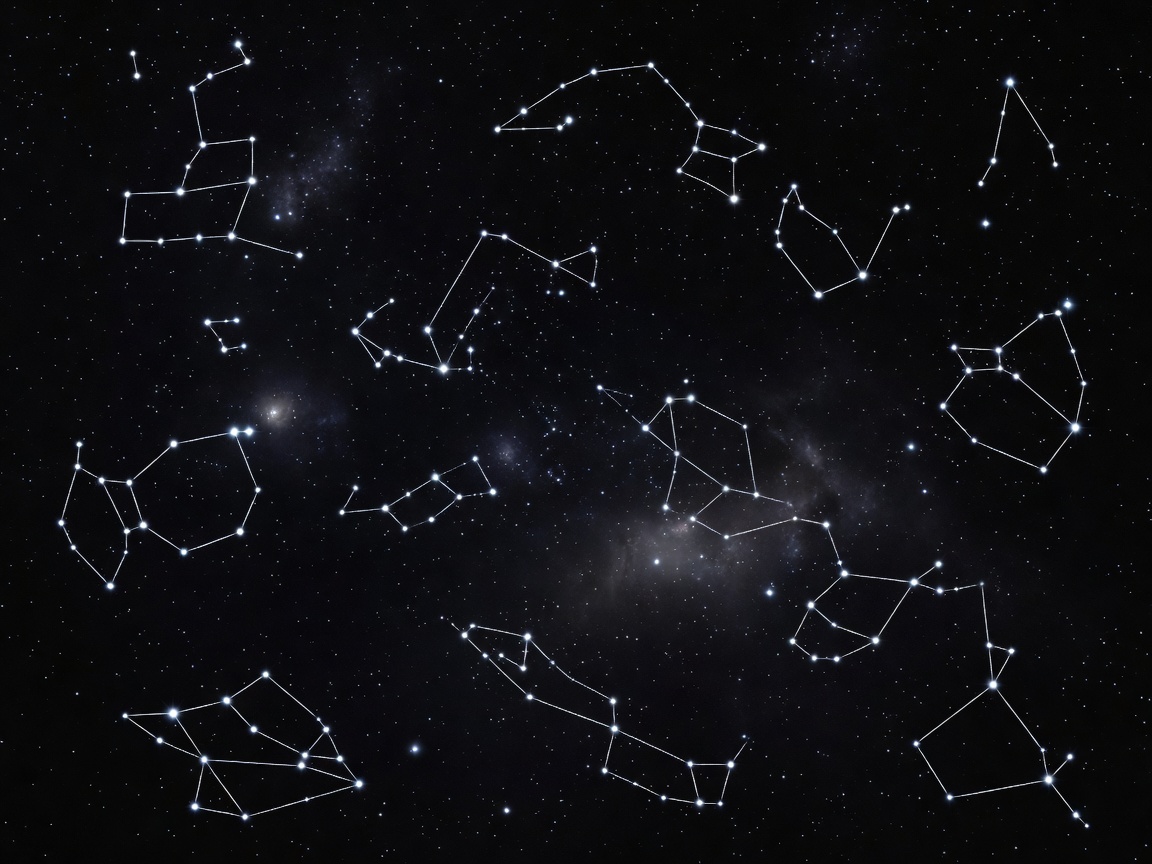
The Structure of the Sky
The International Astronomical Union officially recognizes 88 constellations. These are not just dot-to-dot pictures of mythological figures; they are strictly defined regions of the sky. Just as every piece of land on Earth falls within a specific country's borders, every star, galaxy, and nebula falls within the boundaries of a specific constellation.
When astronomers say a galaxy is "in Andromeda," they mean it lies within the spatial boundaries designated to the Andromeda constellation, regardless of whether the galaxy is physically close to the stars that make up the constellation's shape.
Constellations vs. Asterisms
It is important to distinguish between constellations and asterisms. An asterism is a highly recognizable pattern of stars that is not an official constellation. Often, asterisms are part of a larger constellation, or they borrow stars from multiple adjacent constellations.
The most famous example is the Big Dipper. The Big Dipper is an asterism made of seven bright stars; it forms the tail and hindquarters of the official constellation Ursa Major (the Great Bear). The Summer Triangle is another prominent asterism, formed by connecting three brilliant stars—Vega, Deneb, and Altair—each belonging to a different constellation (Lyra, Cygnus, and Aquila, respectively).
Circumpolar Constellations
Your latitude on Earth dictates which constellations you can see. Observers in the Northern Hemisphere have a group of constellations known as circumpolar constellations. Because these star groupings sit close to the North Celestial Pole (near Polaris, the North Star), they never dip below the horizon. They are visible every clear night of the year.
In the mid-northern latitudes, Ursa Major, Cassiopeia (the prominent W-shape), Cepheus, and Draco are reliably circumpolar. Learning these anchor points is the best way to begin your navigation of the sky, as they provide a constant reference frame.
Seasonal Shifts
As the Earth orbits the Sun, our night-side perspective faces different directions into deep space. This causes the observable constellations to change with the seasons.
- Winter Sky: Dominated by Orion the Hunter, one of the most brilliant and easily recognizable constellations. Following Orion's belt to the lower left leads to Sirius, the brightest star in the night sky, located in Canis Major.
- Spring Sky: Leo the Lion takes center stage, marked by a prominent backwards question mark of stars known as the Sickle. Spring is renowned among amateur astronomers as "galaxy season," as we look out away from the dense Milky Way band into deep intergalactic space.
- Summer Sky: The Milky Way band rises high overhead. The Summer Triangle asterism guides observers toward dense star fields in Scorpius and Sagittarius, which sit near the galactic center.
- Autumn Sky: Pegasus dominates with its Great Square asterism. This season offers excellent views of the Andromeda Galaxy, one of the few deep-sky objects visible to the naked eye under dark conditions.
Tools for Learning the Sky
The traditional tool for learning constellations is the planisphere—a rotating star wheel adjusted for the date and time, providing a map of what is currently overhead. They are excellent because they do not emit bright light to ruin your night vision.
Digital planetarium apps have largely replaced paper charts for beginners. By holding your smartphone up to the sky, the device's gyroscope and GPS overlay constellation lines and object names onto the real sky. While incredibly useful, it is highly recommended to rely on these apps only to verify what you suspect you are looking at, rather than staring strictly at the screen, allowing you to memorize the patterns organically.